How to Get Back into Your Routine After a Vacation (or Two Back-to-Back Weddings!)
October 8, 2024
How to Get Back into Your Routine After a Vacation (or Two Back-to-Back Weddings!)
Ever come back from a vacation or a whirlwind couple of weekends and feel like you need a complete reset? After a couple of weekends standing up in out-of-town weddings, I can relate. But here's the good news—you don’t need to "start over" or go back to day one. In fact, if you’ve built sustainable habits, getting back on track can be a lot easier than you think.
Let’s talk about why you don’t need a complete overhaul and how to ease back into your normal routine without the stress.
No Need to "Start Over" When Habits Are Built to Last
When you've been building healthy habits consistently, a break—whether it's for travel, weddings, or just a busy season—doesn’t undo your progress. Think of your routine like a layered approach: each small, consistent action stacks on top of the last. So even if you took some time off, those layers are still there. You don’t need to erase your slate or throw in the towel.
Instead, think of it as pressing "resume." Your habits have been cultivated over time, so rather than needing to restart, you’re just re-engaging with what you already know works.
Getting Back to Your Normal Routine: Start Simple
Here’s the plan—keep things simple. You don’t need to tackle everything at once. Give yourself permission to ease back in, especially if you didn’t sleep much or spent the weekend on your feet in heels (or a tux).
Step 1: Hydration, Protein, and Fiber
The first order of business is taking care of your body’s basic needs. After travel or busy weekends, dehydration and poor eating habits are common. That’s why it’s essential to get back to your routine with:
- Plenty of water: Hydrate, hydrate, hydrate! Travel, alcohol, and lack of sleep can leave you feeling sluggish, so start by rehydrating.
- Protein: It’s time to feed those muscles. Whether it’s a protein shake, eggs, chicken, or plant-based options, make sure you’re fueling up.
- Fiber: Help your digestive system get back on track with fiber-rich foods. Think leafy greens, whole grains, and fruits.
Step 2: Ease into Workouts
If you didn’t get much sleep or your body feels drained, resist the urge to jump right into intense workouts. Instead, lean on gentle movement. This might look like:
- A light walk
- Stretching or yoga
- Foam rolling
- Low-impact bodyweight exercises
As you catch up on rest and feel your energy return, you can ramp up the intensity of your workouts. Remember, it’s not about doing everything all at once, but gradually building back to your usual routine.
Step 3: Use What You Have & Schedule Groceries
Coming home from a trip (or two!) can feel overwhelming—there’s unpacking, laundry, emails, and a kitchen that might look a little bare. But here’s where your well-stocked freezer and pantry come to the rescue.
While you're still catching up, lean on those back-up items you’ve already prepared:
- Frozen veggies
- Pre-cooked grains
- Canned beans or proteins like tuna or chickpeas
- Maybe even whole meals you've prepped, packaged, and frozen - aka the #1 go-to travel tip from our in-house nutrition expert, Coach Lynne
If you do need to restock your fridge, skip the store and schedule a grocery delivery or pickup. It’s one less thing to worry about, and you can focus on getting back into your routine.
The Power of Consistency Over Perfection
The key takeaway here? Don’t stress about making everything perfect right away. Sustainable habits are all about consistency, not perfection. Life happens—weddings, vacations, unexpected breaks—but those small habits you’ve built over time will carry you through.
If your pantry is stocked, your body is hydrated, and you’re starting to move again, you’re already winning.
Conclusion: Start Where You Left Off
Getting back to your normal routine after a break doesn’t have to be complicated. It’s not about starting over or getting back to “day one”—it’s about returning to what you know works for you. Hydrate, fuel your body, move gently, and give yourself a little grace as you settle back in.
And remember, those habits you’ve been building? They’re still there, waiting for you to hit "play." You've got this!
More Posts
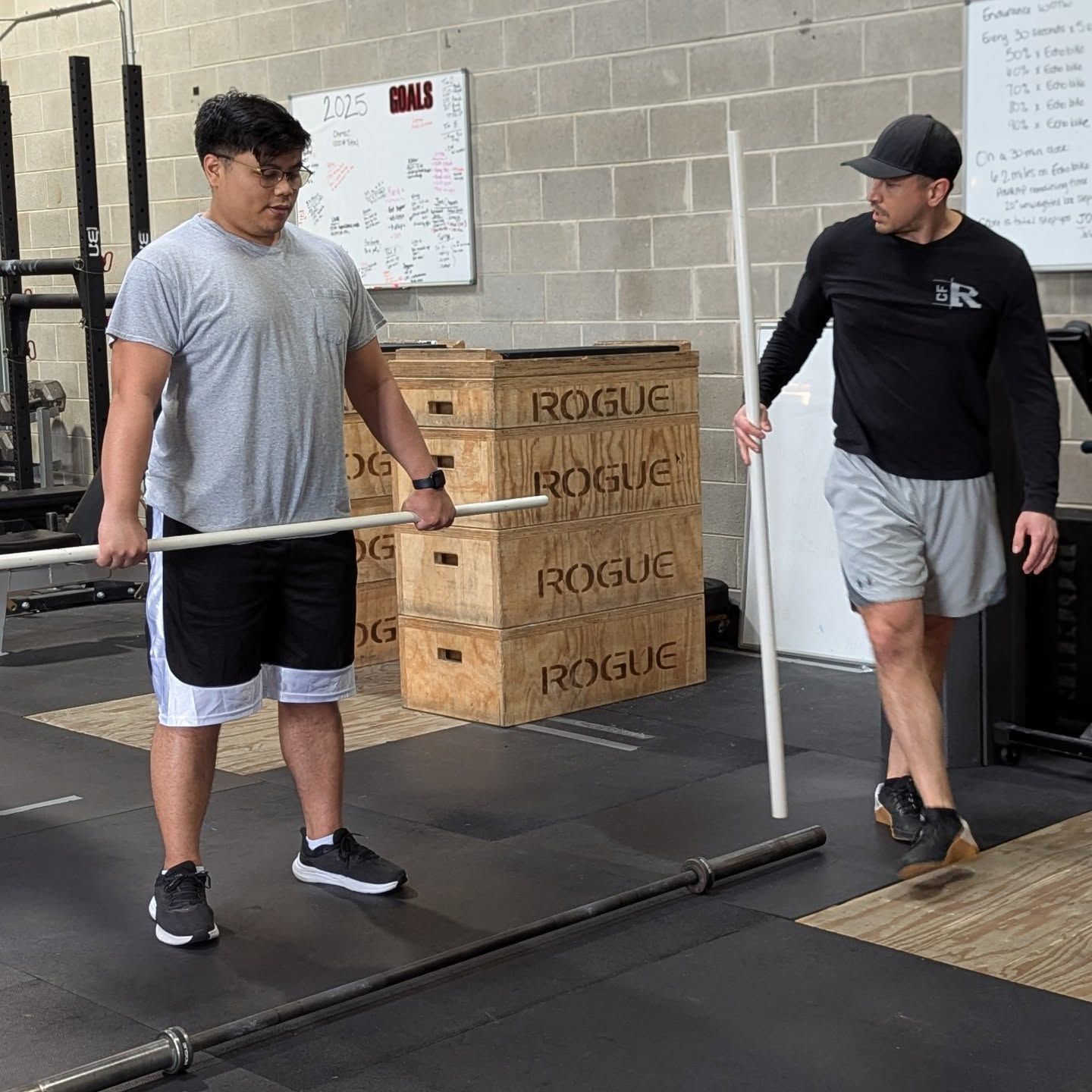
Would you teach a brand new driver on the highway at rush hour? Probably not. You'd start in an empty parking lot. Somewhere quiet, where mistakes cost nothing and someone sits right beside you, pointing out what to adjust. That's the idea behind our on-ramp program. It's been a while since we talked about it here. And if you joined us for a free community workout recently, you've seen what a CrossFit Roselle class looks like. This is what happens before you step into one. What on-ramp actually is On-ramp is five personal training sessions. Just you and a CFR coach. We start with the foundations: squatting, hinging, pressing, pulling, and moving your own body well. Then we build, session by session, all the way up to the Olympic lifts. Yes, the snatch and the clean and jerk. Along the way, you learn the language of CrossFit. What the workout names mean. How to pace yourself. How to scale a movement so it fits you today. What your coach means when they say "chest up" or "drive through your heels." By your first class, none of it feels foreign. You walk in already knowing how to train here. Why one-on-one matters A group class is a great place to train. It's not the best place to learn. Walking into a room full of strangers is intimidating for almost everyone. In on-ramp, the only person watching is your coach. You can ask the question you think is silly. You can try a movement six times before it clicks. Nobody is waiting on you. In a class, a coach is watching a dozen people at once. They'll catch the big stuff. One-on-one, your coach sees everything. The knee that drifts in. The heels that lift. The bar that swings away from your body. They fix it on that rep, not three weeks from now. And the plan bends around you. Schedule limitations? Tight hips? An old shoulder injury? A movement that just isn't clicking today? Your coach can pivot right there. Swap a drill. Take a pause for some mobility. Slow down. Spend the whole session where you need it most. That kind of adjustment is hard to pull off with a full room. You build the right habits from day one, instead of spending months undoing the wrong ones. Brand new, or lifting for years If you've never touched a barbell, on-ramp is your safe place to start. We meet you exactly where you are and build confidence one session at a time. If you've trained for years, you might assume you can skip it. Meet Ashley. Ashley competed in powerlifting. She knows what a loaded bar feels like and what it takes to train for a meet. Still, when she joined CFR in her mid-forties, she was intimidated. She went through on-ramp first. "It gave me confidence quickly in what I was doing, no matter where I was starting," she says. "I try to carry that into every class." Experience in one sport doesn't automatically carry over to another. Powerlifting cues are different. Pacing a 12-minute workout is different. The Olympic lifts are a skill all their own. On-ramp is where experienced athletes learn the new language before they're expected to perform in it. Ashley walked into her first class already belonging there. A couple months later, she's training consistently, has added another workout to her week, and has seen some super exciting body composition changes, too. What we've seen in almost 18 years We've been coaching in Roselle for almost 18 years. We've tried a lot of ways to start new members. Nothing has moved people toward their goals faster than on-ramp. Losing fat. Building muscle. Nailing that first pull-up. Finally landing a clean that's felt out of reach. Whatever the goal, body composition or skill, we have never seen progress happen this quickly. The reason is simple. Five sessions of focused, one-on-one coaching means every class after that builds on a solid base. You're not guessing. You're not compensating. You're training with purpose from the very first day. That foundation doesn't wear off. It pays you back every time you walk in the door, for months and years. What happens next It starts with a no-sweat intro. That's a relaxed conversation about your goals, your history, and what you want training to do for your life. From there, we schedule your five on-ramp sessions with a coach. Then you join classes, ready. If you came to one of our community workouts, you've already done the hardest part. You walked through the door. Let's talk about what comes next. Book your no-sweat intro today. We got you.
Ever notice your best workouts always seem to land in October? Not because you tried harder. Not because you suddenly found some reservoir of willpower you'd been hiding since June. The real reason is quieter than that, and it's been sitting in the weather the whole time. Summer Was Working Against You Picture training in July like running on a treadmill that's secretly tilted uphill. You didn't ask for the incline. Nobody warned you it was there. You just noticed the workouts felt harder, your recovery dragged, and some mornings you skipped the gym entirely and figured you were just being lazy. You weren't lazy. You were hot. Heat is a tax your body pays before you even start moving. Your heart works harder to cool you down. Your perceived effort spikes even when your actual output doesn't. Recovery between sessions stretches longer because your body is busy regulating temperature instead of rebuilding muscle. None of that is a character flaw. It's physiology, and physiology doesn't care how motivated you are. Then Fall Shows Up Like a Favor You Didn't Ask For Cooler air isn't just pleasant. It's a tilted treadmill suddenly leveling out. Your cardiovascular system isn't fighting a two-front war against heat and effort anymore Recovery between workouts tightens up, meaning you can train more often without feeling wrecked The same workout that flattened you in August suddenly feels doable, maybe even good This is the part nobody puts on a motivational poster: your body can handle more right now than it could two months ago . Not because you changed. Because the season did. So Use It Before It's Gone Here's the move. Don't wait for some mythical surge of motivation to add another training day. Add it now, while your body is quite literally built for it. One extra session this month, nothing dramatic, just one more than your summer average. Fall isn't a vibe shift. It's a measurable window where your training gets easier to sustain, and windows like that don't stay open forever. Walk through it while it's still open.
Have you ever avoided trying something because of a story you heard once, from someone who knew someone who got hurt? That's usually how the CrossFit injury reputation spreads. One bad story, repeated enough times, until it feels like fact. Here's what we actually train by, and what the research actually shows. That's not how we train Longevity over intensity isn't a slogan here. It's one of our four core values, and it shapes every workout we lead. Every movement has a scaled version. Coaches adjust for exactly where your body is that day, not where a workout card says you should be. Going all out until something breaks was never the plan. If anything, that approach is the opposite of what keeps people training for years instead of weeks. What the research actually says We get it, CrossFit has a reputation. So instead of just asking you to trust us, here's what several independent studies found. (Want the citations? Email lynne@crossfitroselle.com and I’ll send them right over.) A clinical review of the evidence found that the injury risk from CrossFit is comparable to Olympic weightlifting, distance running, track and field, rugby, football, ice hockey, soccer, and gymnastics. Not higher. Comparable. One study went a step further and found the injury rate in CrossFit was actually lower than the average rate reported among recreational street runners. The sport most people consider the "safe" default carried more risk per hour than the one they were nervous about. And coaching matters more than almost anything else. One study found that full-time trainer supervision dropped the injury rate down to 14.6 percent, which is exactly why every workout here is coached, start to finish. Not just demonstrated once and left to chance. The risk nobody talks about Here's the part of this conversation that usually gets skipped. Sitting still has a cost too. The World Health Organization estimates that 3.3 million people die worldwide every year due to physical inactivity, making it the fourth leading cause of death globally. A CDC study found that 8.3 percent of deaths among non-disabled adults 25 and older were attributed to physical inactivity alone. Nobody frames "staying on the couch" as the risky choice. But the data says it is one. So where does that leave you Every workout, every scale, every modification, every coach standing next to you the entire time, all of it exists so you can build strength without gambling with your body to do it. Come see it for yourself. Free community workout, Saturday, Oct. 3, 8:30am and 9:30am. No experience needed. And if you’re coming to us with an existing injury, let the coach know so we can find the right modification that keeps you moving. Reserve your free spot here