The Floor Test

Lynne Steiner • August 10, 2026

Picture this. You're down on the living room rug playing with a kid, a grandkid, or maybe just chasing the dog's tennis ball because nobody else would. It's a good moment. Then it's time to stand up.


And something goes wrong. Not dramatically. Just... a hand on the coffee table. A slow, undignified roll to one side. A little grunt you didn't mean to make out loud.


That's not aging. That's a strength deficit with a due date, and it's been quietly accumulating for years.


The Problem Nobody Warns You About


Most people don't notice their capability slipping until the exact moment they need it. Not before. There's no alarm bell for "you can no longer pop up off the floor without bracing on furniture." It just becomes true one day, and you find out the hard way.


Here's the part that stings: the fitness industry has spent decades selling you a mirror when it should have been selling you a floor test. Six-pack abs. Toned arms. None of that tells you whether you can catch yourself when you trip, or scoop a laundry basket without your lower back filing a complaint. Strength that only exists for photos isn't strength. It's decoration.


The real cost shows up in the boring stuff. Getting off the floor uses a specific combination of hip strength, core control, and coordination, and it's one of the first things to quietly go if you're not training for it on purpose. Not because you're old. Because you stopped asking your body to do it.


Try This Today


Here's your homework, and it takes 30 seconds. Sit down on the floor, then stand back up, no hands allowed. Not a graceful yoga flow. Just get down and get up.


Easy? Good. Keep doing what you're doing.


Awkward, wobbly, or impossible without a hand on something? That's useful information, not a verdict. It's a starting point.


Strength training isn't about chasing a look. It's rehearsal for the moments that actually matter: the floor, the stairs, the grocery bags, the trip you catch yourself from instead of falling into. Build that capacity now, deliberately, while it's easy to build. Because the version of you at 75 is being trained today, whether you show up for it or not.


Not sure where to start? Click that Book a Free Intro button and let's chat.

More Posts
By Lynne Steiner • September 25, 2026
Have you ever skipped trying something new because you didn't know where to park, which door to walk through, or what you'd do once you got inside? That hesitation stops more people than the workout itself ever would. So here's exactly what Saturday morning looks like, start to finish, before you ever have to wonder. What to bring Keep it simple. A change of shoes, especially if it's wet or snowy outside (you never know in October in the midwest). A water bottle. And eat a small snack before you come. Showing up on an empty stomach makes everything harder than it needs to be. That's it. For everything else, we got you. Finding the door Our building has four doors that all say CrossFit Roselle, which trips people up regularly. Here's the one you want: the clear glass door on the north side of the building, labeled Unit D. That's the one. If you're standing in front of a door wondering if it's the right one, it's the glass one and it says “Unit D.” Walking in The first room you'll see is our open gym space. On Saturday mornings, when classes run bigger, we open it up as a second room for the workout. Big energy, big space, lots of people moving. It's one of our favorite parts of the week. Right when you walk in, you’ll come through a small entryway and then a second door, and you'll see shelves for your things to your left. Shoes you walked in wearing, your bag, your jacket, your car keys, all of it goes there. Simple as that. You won't be the only one arriving. Other people showing up for the same workout will likely say hi, and if you're not sure where to put something or where to go next, ask any of them. This is a room full of people who remember exactly what their first Saturday felt like. Getting started Class begins through the small door between the two rooms. If you can't spot it right away, follow the flow of people, or ask. Coaches are near the front door too, so you're never more than a question away from knowing where to be. Once everyone's in, a coach leads the group through a warm up and walks through the workout for the day, including every option for scaling or modifying it. Injury, time off, experience level, current goals, whatever's true for you that day, there's a version of the workout that fits it. About that partner thing If you come with a friend, you've already got a partner. If you come alone, we'll pair you with someone from our CFR fam who will work right alongside you and your coach for the rest of class. Here's the concern we hear most from people trying this for the first time: "What if I'm not experienced, or I haven't worked out in a while, and I end up holding my partner back?" You won't. Partner workouts are built so both people get equal work and equal rest, and coaches are there specifically to help adjust that balance as needed. Nobody's timing your reps against theirs. That's not what this is. Winding down After the workout, we head outside for a cool down walk. Fresh air, a few minutes to chat with the people you just sweated next to, and a shift into whatever the rest of your Saturday looks like. From the moment you walk through that glass door to the moment you leave, someone's guiding you through it. And we'll follow up with you afterward too, because a good first morning shouldn't be the last time you hear from us. Come see it Saturday Join us Saturday, October 3, for a free community workout. Two times to choose from, 8:30am and 9:30am. Bring a friend if you've got one, or come solo and let us handle the rest. Now you know exactly what the morning looks like. The only thing left is showing up. Reserve your spot here and send this to the friend you want to bring with.
By Lynne Steiner • September 21, 2026
You know the feeling. You're three reps into a set and suddenly your brain checks out for a coffee break it didn't ask permission for. Or you're at your desk, staring at the same email for ten minutes like it's written in a language you used to know. Everyone blames this on being tired. Stressed. Getting older. Rarely does anyone blame the sandwich they skipped at lunch. But your brain is an organ, and like every other organ in your body, it runs on fuel. Starve it a little and it doesn't crash dramatically. It just goes quiet. Fuzzy. A step behind. The Fog Nobody Talks About We measure fitness in numbers we can see. Pounds lifted. Miles run. Minutes shaved off a mile time. Nobody puts "mental sharpness" on a whiteboard, so it's easy to forget it's a performance metric too, and one that food controls just as much as your squat max. Here's where it shows up if you're paying attention: In the gym: you miss a coaching cue you'd normally catch instantly, your form gets sloppy on a lift you usually own, or your reaction time on a workout feels a half-second slow, like your brain is buffering. At work: you reread the same paragraph three times, or you agree to a meeting you'll definitely resent by Thursday because your judgment took a coffee break too. None of that is a personality flaw. It's chemistry. Your brain runs almost entirely on glucose, and it is famously picky about a steady supply. Skip meals, load up on sugar spikes, or run on caffeine alone, and you're basically asking a race car to sprint on fumes and hoping it won't notice. Food Is Not Just Fuel for Muscles Most people think about nutrition purely in terms of the body they see in the mirror. Bigger arms. Leaner waist. Nobody pictures their prefrontal cortex when they're deciding between a protein shake and a candy bar, but that decision matters there too. A steady, balanced intake throughout the day (not a single "smart" meal, but consistency across all of them) keeps your blood sugar from swinging like a pendulum. And a steady blood sugar level is the difference between a brain that fires clean and one that flickers like a bad light bulb. The Fix Is Smaller Than You Think You don't need a supplement stack or a 12-step meal plan to fix this. Start here: Eat something with protein and fat within an hour of waking up. This alone slows the blood sugar rollercoaster before it even starts. Don't let more than four hours pass without eating something real. Not a granola bar dressed up as food. Something with actual substance. Hydrate before you assume you're tired. Mild dehydration mimics fatigue almost perfectly, and most people never think to rule it out. Your mental sharpness is trainable, the same way your deadlift is trainable. It just responds to a different kind of rep: consistent, well-timed meals instead of well-timed sets. Feed your brain like it matters, because it's doing more work than any muscle in your body.
By Lynne Steiner • September 14, 2026
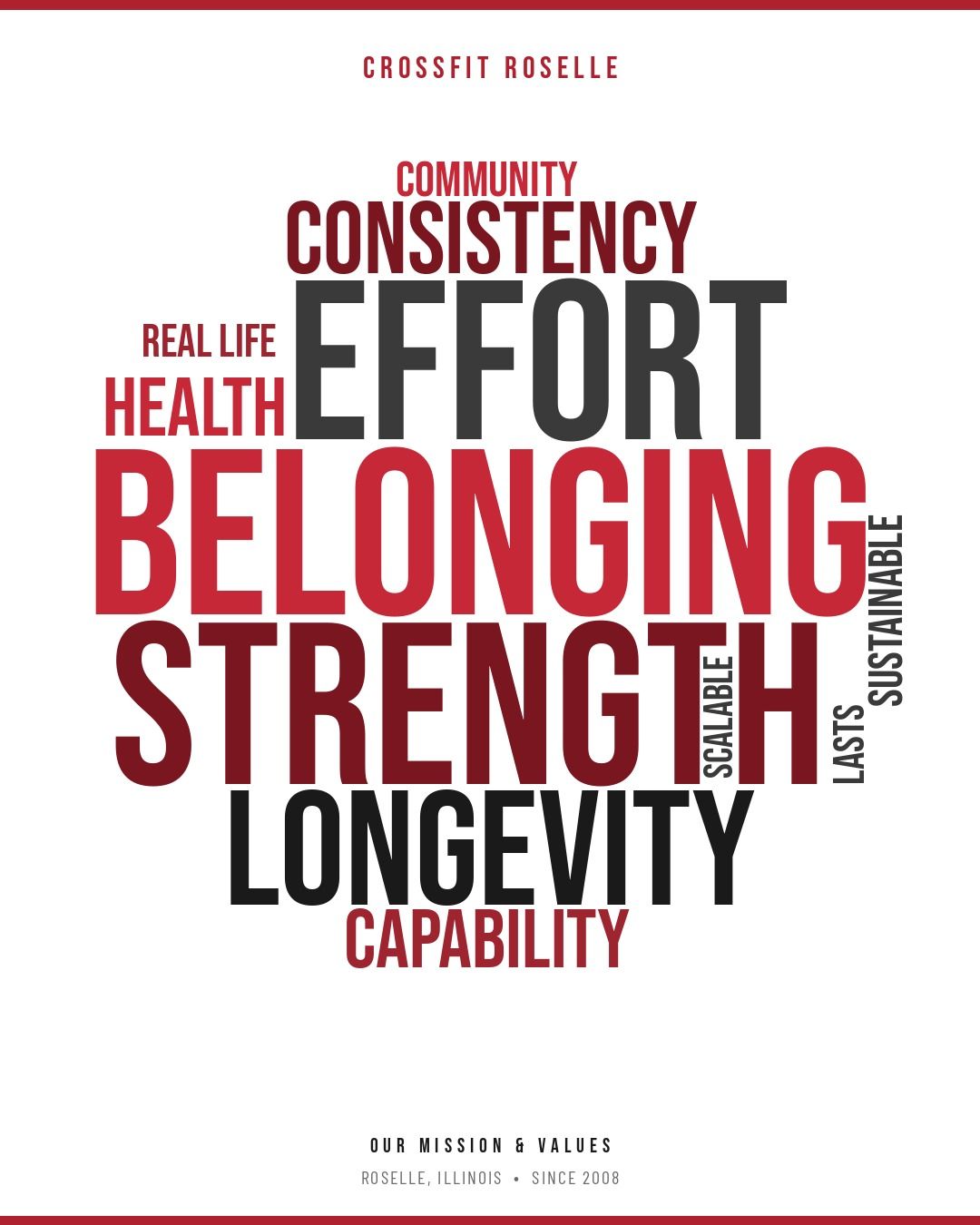
Have you ever avoided trying something because you were pretty sure everyone else already knew what they were doing? That's most people's picture of a CrossFit gym. Elite athletes, impossible weights, a room full of people who've clearly done this before. Here's the truth. That's only part of the picture, and it's not where most people start. We didn't write a mission statement to hang on a wall and forget about. We wrote it because we needed to know, on the hard days and the easy ones, why we're doing this. Here it is: We help real people build strength and health that lasts, through every season of life. Every word of that matters. Real people, whether that's your first week in a gym or your tenth year chasing competition podiums. Lasts, not a six-week transformation that falls apart in month two. Every season, because your life at 25 doesn't look like your life at 45, and neither should your training. Here's what that actually looks like day to day. We meet you where you are Every workout fits your body, your day, and your life. We're not building something that only works if you have four hours and zero responsibilities. If a movement doesn't fit where you're at right now, we scale it. That's not a consolation prize. That's the whole point. Longevity over intensity We're building a lifetime of athleticism. For most people, that means training that fits into a full life instead of taking it over. For some people, that means chasing the Open or a local competition because it's fun and they're built for that kind of push. Both belong here. The season you're in determines how hard you push, not how welcome you are. Effort is the metric We measure what you give, not what you weigh or lift or look like. You won't find a "lose the most weight" challenge here. What you'll find is people getting stronger, staying consistent, and being proud of showing up, whatever that looked like that day. Belonging is not negotiable Everyone working toward better health belongs here, full stop. Not everyone who joins a gym has felt that way before. We built this one so you would. Come see it for yourself: Reading about values is one thing. Feeling them in a room is another. Saturday, Oct. 3, we're opening our doors for a free community workout. Two time slots: 8:30am and 9:30am. No experience needed, no special gear required, no membership to sign up. Come find out what it feels like to walk into a gym built for exactly where you are. Reserve your free spot here
More Posts