Why We Start New Members One-on-One

Lynne Steiner • October 5, 2026

Would you teach a brand new driver on the highway at rush hour?


Probably not. You'd start in an empty parking lot. Somewhere quiet, where mistakes cost nothing and someone sits right beside you, pointing out what to adjust.


That's the idea behind our on-ramp program.


It's been a while since we talked about it here. And if you joined us for a free community workout recently, you've seen what a CrossFit Roselle class looks like. This is what happens before you step into one.

What on-ramp actually is

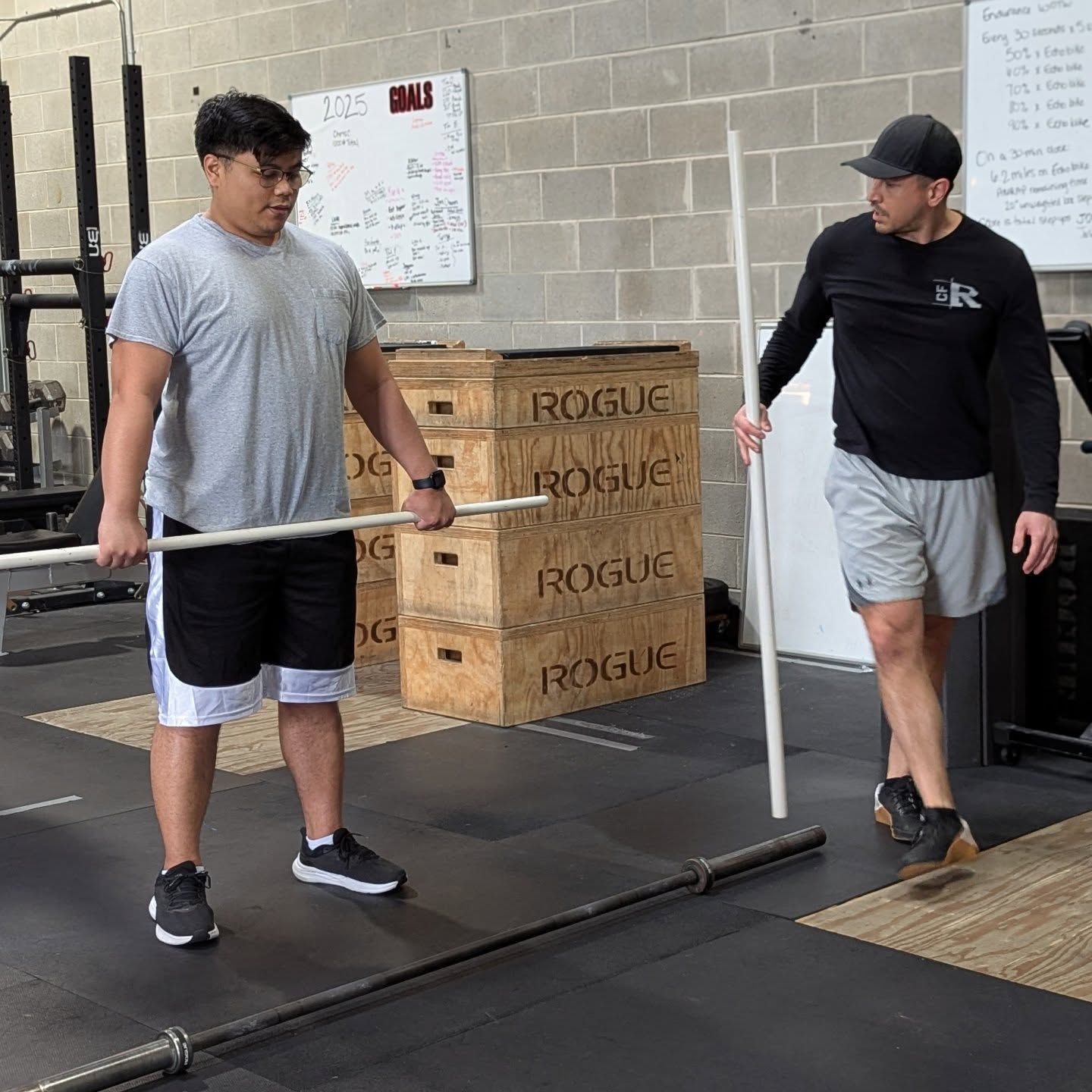
On-ramp is five personal training sessions. Just you and a CFR coach.


We start with the foundations: squatting, hinging, pressing, pulling, and moving your own body well. Then we build, session by session, all the way up to the Olympic lifts. Yes, the snatch and the clean and jerk.


Along the way, you learn the language of CrossFit. What the workout names mean. How to pace yourself. How to scale a movement so it fits you today. What your coach means when they say "chest up" or "drive through your heels."


By your first class, none of it feels foreign. You walk in already knowing how to train here.

Why one-on-one matters

A group class is a great place to train. It's not the best place to learn.


Walking into a room full of strangers is intimidating for almost everyone. In on-ramp, the only person watching is your coach. You can ask the question you think is silly. You can try a movement six times before it clicks. Nobody is waiting on you.


In a class, a coach is watching a dozen people at once. They'll catch the big stuff. One-on-one, your coach sees everything. The knee that drifts in. The heels that lift. The bar that swings away from your body. They fix it on that rep, not three weeks from now.


And the plan bends around you. Schedule limitations? Tight hips? An old shoulder injury? A movement that just isn't clicking today? Your coach can pivot right there. Swap a drill. Take a pause for some mobility. Slow down. Spend the whole session where you need it most. That kind of adjustment is hard to pull off with a full room.


You build the right habits from day one, instead of spending months undoing the wrong ones.

Brand new, or lifting for years

If you've never touched a barbell, on-ramp is your safe place to start. We meet you exactly where you are and build confidence one session at a time.


If you've trained for years, you might assume you can skip it. Meet Ashley.


Ashley competed in powerlifting. She knows what a loaded bar feels like and what it takes to train for a meet. Still, when she joined CFR in her mid-forties, she was intimidated. She went through on-ramp first.


"It gave me confidence quickly in what I was doing, no matter where I was starting," she says. "I try to carry that into every class."


Experience in one sport doesn't automatically carry over to another. Powerlifting cues are different. Pacing a 12-minute workout is different. The Olympic lifts are a skill all their own. On-ramp is where experienced athletes learn the new language before they're expected to perform in it.


Ashley walked into her first class already belonging there. A couple months later, she's training consistently, has added another workout to her week, and has seen some super exciting body composition changes, too.

What we've seen in almost 18 years

We've been coaching in Roselle for almost 18 years. We've tried a lot of ways to start new members.


Nothing has moved people toward their goals faster than on-ramp.


Losing fat. Building muscle. Nailing that first pull-up. Finally landing a clean that's felt out of reach. Whatever the goal, body composition or skill, we have never seen progress happen this quickly.


The reason is simple. Five sessions of focused, one-on-one coaching means every class after that builds on a solid base. You're not guessing. You're not compensating. You're training with purpose from the very first day.


That foundation doesn't wear off. It pays you back every time you walk in the door, for months and years.

What happens next

It starts with a no-sweat intro. That's a relaxed conversation about your goals, your history, and what you want training to do for your life.

From there, we schedule your five on-ramp sessions with a coach.


Then you join classes, ready.


If you came to one of our community workouts, you've already done the hardest part. You walked through the door. Let's talk about what comes next.


Book your no-sweat intro today. We got you.

More Posts
By Lynne Steiner • November 16, 2026
Have you ever eaten one piece of birthday cake in the office break room, declared the day a total loss, and then “celebrated” with a large pizza and half a bag of chips? You’re not weak. You’re not broken. You fell into one of the most predictable traps in nutrition, and it has a name. Meet the what-the-hell effect Researchers Janet Polivy and C. Peter Herman spent years studying what happens when dieters break their own rules. In one classic experiment, dieters and non-dieters drank a milkshake. Then they were asked to “taste test” some ice cream. The non-dieters ate less ice cream. Makes sense. They were full of milkshake. The dieters ate more . The milkshake broke their rule, so in their heads, the rule no longer counted. The day was already ruined. What the hell, pass the spoon. It’s like cracking your phone screen and then throwing the phone off the roof because it’s already damaged. The cookie didn’t do the damage. The rule did. One cookie is about 150 calories. The spiral that follows can easily run into the thousands. The problem isn’t the food. It’s how fragile the rule is. Rigid rules are made of glass. “I never eat sugar.” “No carbs after 6.” One slip and they shatter. Flexible rules are rubber bands. “I have dessert a couple of times a week.” They stretch, snap back, and keep working. Research backs this up. People who take a flexible approach to eating tend to weigh less and binge less often than people who live by strict, all-or-nothing rules. Why “cheat meal” is a terrible name You’re not cheating on your broccoli. “Cheat” means betrayal, and betrayal brings guilt. Guilt is a lousy coach. It doesn’t teach you anything. It just makes you want to hide in the pantry. Call it what it is: a meal. Sometimes it’s a meal you love. That’s allowed. How to break the spiral Rewrite one rigid rule. “No sugar ever” becomes “Dessert twice a week, eaten slowly, at the table, with zero apologies.” Schedule your favorites. Friday pizza on the calendar isn’t a slip. It’s the plan working. Use the next-meal reset. After a big meal, your next meal is just normal: protein, something green, a glass of water. No punishment burpees. No skipped breakfast. Shrink the story. One meal is one meal. It isn’t a verdict on your character. Try this This week, find one all-or-nothing food rule you live by and write it down. Then rewrite it as something you could follow on your busiest, crankiest Tuesday. That’s it. One rule. The people who stay fit for decades don’t have the strictest rules. They’re the ones who can eat birthday cake on Wednesday and show up to train on Thursday like nothing happened. Because nothing did. Feel like you need a more personalized approach? Book a no-sweat intro and let's talk about nutrition coaching!
By Lynne Steiner • November 12, 2026
I'm writing this with my hair still wet. This week ran so far away from me that I stepped out of the shower and ran out the door to get my kids from school. If your calendar looks anything like mine right now, it's a lot. Band concerts. Dance performances. Class parties that require prep work ahead of time. Work parties. Holiday everything. All piled on top of the regular stuff. So this one is for anyone who needs to hear it, me included. My advice for the next few weeks: lower the bar. Not drop it. Lower it. Boring meals count This is not the season to try a new 14-ingredient recipe on a Tuesday. Keep it simple. Every plate gets: 🍗A palm-sized portion of protein 🫘Some fiber (veggies, fruit, beans) 🍠Some carbs 🥑A little fat That's it. That's the plan. And for the love, buy the precut frozen veggies. Nobody hands out medals for chopping broccoli at 6pm while someone asks where their favorite leotard is. Worried about being bored? Change the sauce, not the meal. Chicken, rice, and green beans can be teriyaki night, salsa verde night, buffalo night, or peanut sauce night. Same groceries. Totally different meal experience. Boring and fed beats fancy and skipped. Short workouts count You have a meeting at 1pm. Or a concert at 7. Or a holiday party you can't skip. Or a kid's practice at 6. Come anyway. Do the warm-up and the strength piece. Leave when you need to leave. Your coach will wave you out the door, not give you the side-eye. Twenty minutes of moving is still moving. Half a class is still a class. And if the gym truly isn't happening? Take a walk break. Ten minutes outside still counts. Take the after-dinner walk This one is great, even in the cold. After dinner, put on shoes and walk for 10 or 15 minutes. Bring the kids. Bring the dog. Go look at Christmas lights. It helps your body handle the meal you just ate, it helps you wind down, and it gives you a few minutes with your people that aren't spent in the car between activities. The lowered bar If you do nothing else this season, do these four things: ♥️Make sure you're fed. ♥️Make sure you're moving. ♥️Drink some water. ♥️Find some joy. That last one especially. Watch the concert without checking your email. Eat the cookie your kid decorated. Laugh at the class party chaos. Your fitness doesn't disappear because you had a few weeks of short workouts and boring dinners. That's actually what consistency looks like when life is full. Not perfect. Just still showing up. The higher bar will be right there waiting in January.  If you want help building a simple plan that fits your crazy season, book a no-sweat intro with us. We got you.
By Lynne Steiner • November 12, 2026
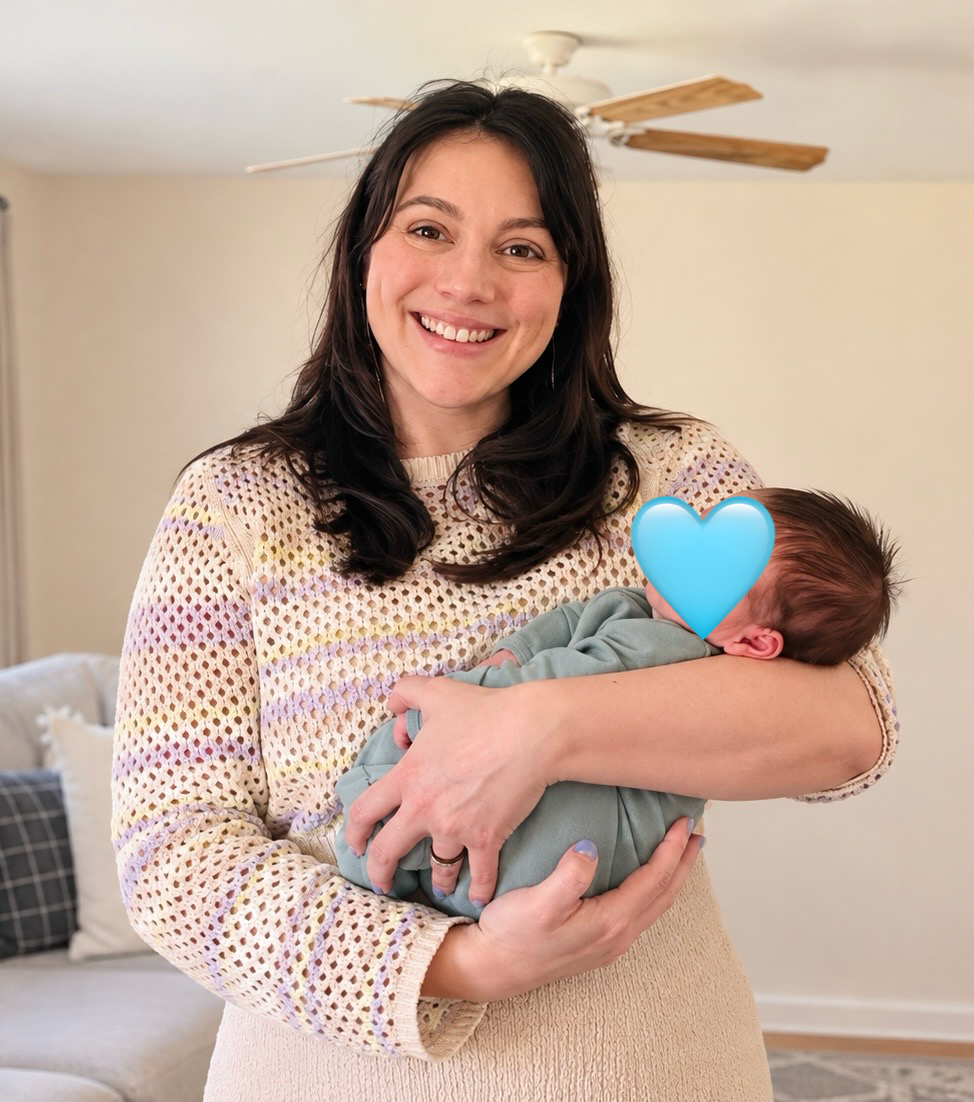
Ever notice how the people who need a break the most are the last ones to take one? New moms might be the best example. Madeline almost became one of them. When she and her husband were house hunting, being close to a gym was on her list. She landed a little over a mile from CFR, close enough to walk on nice days. What kept her coming back was the people and the challenge. "Suffering through a workout is so much more fun with friends," she told us. She also loved being pushed into things she'd never try on her own. Then she found out she was pregnant. Training through pregnancy At the time, she was training for a half marathon. Morning sickness and fatigue ended that plan fast. After the first trimester, things eased up. She went back to a pretty normal routine: CrossFit until about 36 weeks, a walk every day, and yoga once a week. The biggest surprise? How good she felt. Not everyone around her shared that confidence. Family worried. Early on, her OB suggested she limit her lifting to under 20 pounds. That same day, she went to the gym and hip-thrusted 200 pounds for reps. Before anyone panics: this wasn't a beginner ignoring her doctor. Madeline had years of training behind her, knew how her body responded, and worked with our coaches to scale and adjust every step of the way. That's the real lesson. Training during pregnancy isn't one rule for everybody. It's the right plan for your body, built with people who know you. "I felt confident that I knew my body, my capabilities, and my limits better than anyone else," she said. She credits staying active with helping her feel ready for labor, and with a healthy baby boy. The comeback (and the almost-quit) Her first class back was Murph prep: squats, pushups, pullups. She barely remembers it, except that an air squat felt impossible. "Physically, I was humbled. Mentally, I was just happy to be there." Then came the part a lot of new moms will recognize. Her son wanted Mom and only Mom. Every hour at the gym came with a side of guilt. So she started planning to cut back. Then Coach Lisa told her, "You need this now more than ever." She was right. "Making the time for myself didn't make me any less of a mom," Madeline said. "If anything, it made me a better one." How it fits now She trains on her lunch break. With a nanny at home during the week, she heads over at noon, trains, and goes straight back to work. When the workday ends, she's fully with her family. Some days she shows up five minutes late. Other days she slips out early for a 1 PM meeting. That's fine. Training should fit your life, not take it over. What's harder, and what came back fast Her lower back hasn't been the same since a difficult epidural. Overhead lunges and overhead squats are still tough. Even a regular lunge took a long time to feel ok. But double-unders? She did a big set on her second day back. Her core and pelvic floor strength returned faster than she expected. The hardest part wasn't physical at all. Sleep deprivation. Weight changes. Anxiety. Hormones. Some days she came to the gym and cried. People told her she looked great, that she was so strong. She knew they meant well. It was still hard to believe. "You can be grateful for your body, appreciate the life that it's created, while also struggling to feel like yourself. Both things can be true." If that ain’t the truth. The one quiet hour So what does the gym give her now? "A BREAK! Only half joking." In the middle of a WOD, she isn't thinking about work, the baby, dinner, or the 500 things on her list. For one hour, she just exists. If you're pregnant or a new mom Her advice: fitness doesn't have to wait. Movement doesn't mean going all-out or chasing your old numbers. It means doing what you can, where you are right now. All of it counts. And taking that time isn't selfish. "Moms take care of everything and everyone. You deserve to add yourself to that list." If you're expecting or recently had a baby and want a plan that fits the body you have today, book a no-sweat intro. We'll talk through where you are and build from there. We got you. 
More Posts