Build the Strength That Keeps You Free at 92
Lynne Steiner • February 27, 2026
You've probably seen the video. (If not, you can watch it here: https://www.tiktok.com/@dailymail/video/7608896488717962510)
An elderly woman climbing a fence to escape her nursing home.
Impressive. Slightly hilarious. Slightly unsettling.
Because beneath the humor sits a serious question:
If you had to climb that fence at 92… could you?
Not because you are escaping.
But because you are capable.
March is the perfect month to ask that. The January motivation confetti has settled. February felt like survival. Now you’re standing in that gray, slushy middle thinking, I should probably tighten things up.
Good.
Let’s tighten the right things.
Train for Capability, Not Just Calories
Most middle-aged parents train for two things:
- To burn calories
- To lose weight
Neither guarantees independence.
Freedom requires something sturdier.
- Muscle
- Strength
- Balance
- Power
After 30, muscle slowly erodes if you do nothing about it. Not dramatically. Just quietly. Like a savings account you stopped contributing to.
Muscle is metabolic armor.
- It improves blood sugar control.
- It supports hormones.
- It protects joints.
- It reduces fall risk.
Strength lets you lift a suitcase without throwing your back out and ruining your vacation.
Power lets you catch yourself when you trip over a Lego.
Balance keeps you upright on slick March mornings.
Sweat feels productive. Capability is protective.
Stop Training for Smaller. Start Training for Stronger.
By March, scale anxiety creeps back in.
“I just need to tighten things up.”
But smaller and weaker is not the goal.
Grip strength alone is strongly associated with longevity. Your handshake may matter more than your waist measurement.
Ask better questions:
- Can I get off the floor without using my hands?
- Can I carry awkward loads without tweaking my back?
- Can I move quickly if I need to?
Longevity is not built through random cardio bursts. It is built through progressive strength and intentional intensity.
Your March Reset Plan
Keep it simple. Keep it powerful.
- Two lower-body strength sessions per week
- Squats, step-ups, or lunges
- Hinges like deadlifts or hip bridges
- Two upper-body pulling movements
- Rows
- Assisted pull-ups
- Short conditioning finishers that challenge you without draining you
No marathon cardio.
No punishment workouts.
No chasing exhaustion.
You are not training for applause.
You are training for autonomy.
March is your chance to build the kind of strength that keeps doors open for decades.
So when life puts a fence in front of you at 92, you do not stare at it.
You climb it.
Need more guidance? Click the Book a Free Intro button and let's chat about how we can help at CFR.
More Posts
Why Your Fresh Start Doesn’t Need a Calendar
Your body runs on a clock. Every fall, someone sneaks in and starts nudging the hands. You feel it by mid-October. The 3 pm slump moves in like a houseguest who never leaves. Dinner turns into second dinner. Your gym bag sits by the door, staring at you like a disappointed golden retriever. On November 1, the clocks fall back and the sun starts clocking out around 4:30. That isn’t a willpower problem. It’s a rhythm problem. And rhythm problems have fixes. Why shorter days hit so hard Your internal clock takes its orders from light. Bright morning light tells your brain the day has started, which sets the timer for energy now and sleepiness later. Steal that light and the timer goes fuzzy. You wake up groggy, fade by afternoon, then lie in bed somehow tired and wired at the same time. Meanwhile, the evening daylight that used to whistle you to the gym is gone before you leave work. No cue, no habit. Catch the morning light Step outside within 30 minutes of waking. Ten to fifteen minutes does the job. Clouds still count. A gray sky is far brighter than your kitchen lights. Stack it. Drink your coffee on the porch, walk the dog, or park at the far end of the lot. Train at the same time every day Daylight used to tell you when to train. Now the clock has to. Treat your workout like a dentist appointment. You don’t cancel those because it’s dark out. Lay out your gear the night before. Future you is a negotiator. Take away the bargaining chips. Cold morning? Add a few minutes to your warm-up. Stiff joints are like a frozen car engine. Give them time to turn over. Lead dinner with protein Long, dark evenings are snack territory. Around 8 pm, the pantry starts whispering your name. Build dinner around a solid portion of protein. It keeps you full longer than a plate that’s mostly carbs. Close the kitchen after dinner. Brush your teeth early if you need a hard stop. Toothpaste and cookies make a terrible duet. Start with one You don’t need all three by Monday. Pick the anchor that feels easiest, run with it for a week, then add the next. Shorter days change your rhythm. They don’t change your capabilities.
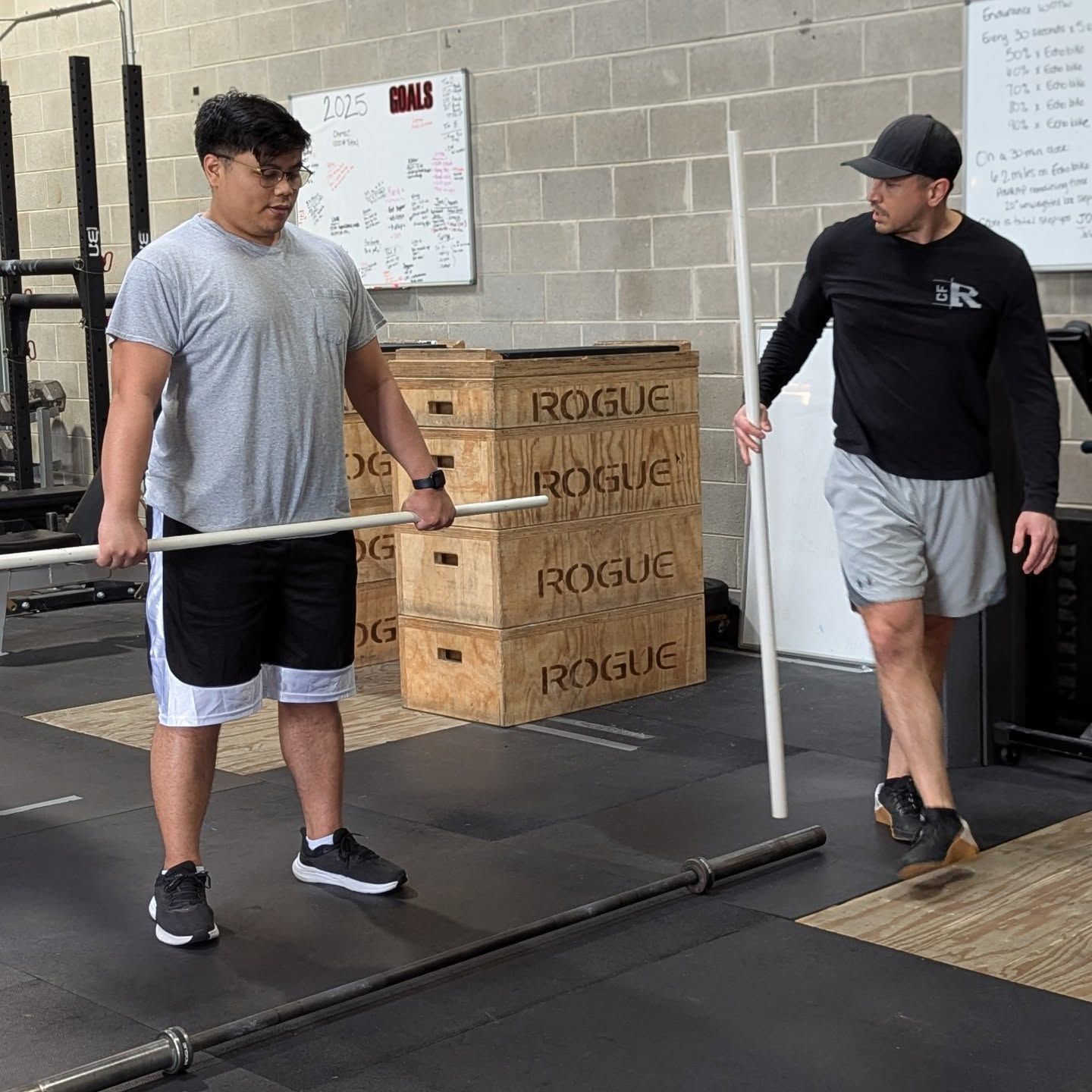
Would you teach a brand new driver on the highway at rush hour? Probably not. You'd start in an empty parking lot. Somewhere quiet, where mistakes cost nothing and someone sits right beside you, pointing out what to adjust. That's the idea behind our on-ramp program. It's been a while since we talked about it here. And if you joined us for a free community workout recently, you've seen what a CrossFit Roselle class looks like. This is what happens before you step into one. What on-ramp actually is On-ramp is five personal training sessions. Just you and a CFR coach. We start with the foundations: squatting, hinging, pressing, pulling, and moving your own body well. Then we build, session by session, all the way up to the Olympic lifts. Yes, the snatch and the clean and jerk. Along the way, you learn the language of CrossFit. What the workout names mean. How to pace yourself. How to scale a movement so it fits you today. What your coach means when they say "chest up" or "drive through your heels." By your first class, none of it feels foreign. You walk in already knowing how to train here. Why one-on-one matters A group class is a great place to train. It's not the best place to learn. Walking into a room full of strangers is intimidating for almost everyone. In on-ramp, the only person watching is your coach. You can ask the question you think is silly. You can try a movement six times before it clicks. Nobody is waiting on you. In a class, a coach is watching a dozen people at once. They'll catch the big stuff. One-on-one, your coach sees everything. The knee that drifts in. The heels that lift. The bar that swings away from your body. They fix it on that rep, not three weeks from now. And the plan bends around you. Schedule limitations? Tight hips? An old shoulder injury? A movement that just isn't clicking today? Your coach can pivot right there. Swap a drill. Take a pause for some mobility. Slow down. Spend the whole session where you need it most. That kind of adjustment is hard to pull off with a full room. You build the right habits from day one, instead of spending months undoing the wrong ones. Brand new, or lifting for years If you've never touched a barbell, on-ramp is your safe place to start. We meet you exactly where you are and build confidence one session at a time. If you've trained for years, you might assume you can skip it. Meet Ashley. Ashley competed in powerlifting. She knows what a loaded bar feels like and what it takes to train for a meet. Still, when she joined CFR in her mid-forties, she was intimidated. She went through on-ramp first. "It gave me confidence quickly in what I was doing, no matter where I was starting," she says. "I try to carry that into every class." Experience in one sport doesn't automatically carry over to another. Powerlifting cues are different. Pacing a 12-minute workout is different. The Olympic lifts are a skill all their own. On-ramp is where experienced athletes learn the new language before they're expected to perform in it. Ashley walked into her first class already belonging there. A couple months later, she's training consistently, has added another workout to her week, and has seen some super exciting body composition changes, too. What we've seen in almost 18 years We've been coaching in Roselle for almost 18 years. We've tried a lot of ways to start new members. Nothing has moved people toward their goals faster than on-ramp. Losing fat. Building muscle. Nailing that first pull-up. Finally landing a clean that's felt out of reach. Whatever the goal, body composition or skill, we have never seen progress happen this quickly. The reason is simple. Five sessions of focused, one-on-one coaching means every class after that builds on a solid base. You're not guessing. You're not compensating. You're training with purpose from the very first day. That foundation doesn't wear off. It pays you back every time you walk in the door, for months and years. What happens next It starts with a no-sweat intro. That's a relaxed conversation about your goals, your history, and what you want training to do for your life. From there, we schedule your five on-ramp sessions with a coach. Then you join classes, ready. If you came to one of our community workouts, you've already done the hardest part. You walked through the door. Let's talk about what comes next. Book your no-sweat intro today. We got you.